
Laser therapy has become a valuable tool in veterinary rehabilitation – offering pain relief, tissue healing and anti-inflammatory benefits without the need for drugs or invasive procedures. But what’s really happening when that beam of light touches your dog’s skin?
Let’s take a closer look at how laser therapy works, what conditions it helps with, and how we ensure it’s both safe and effective.
What Is Laser Therapy?
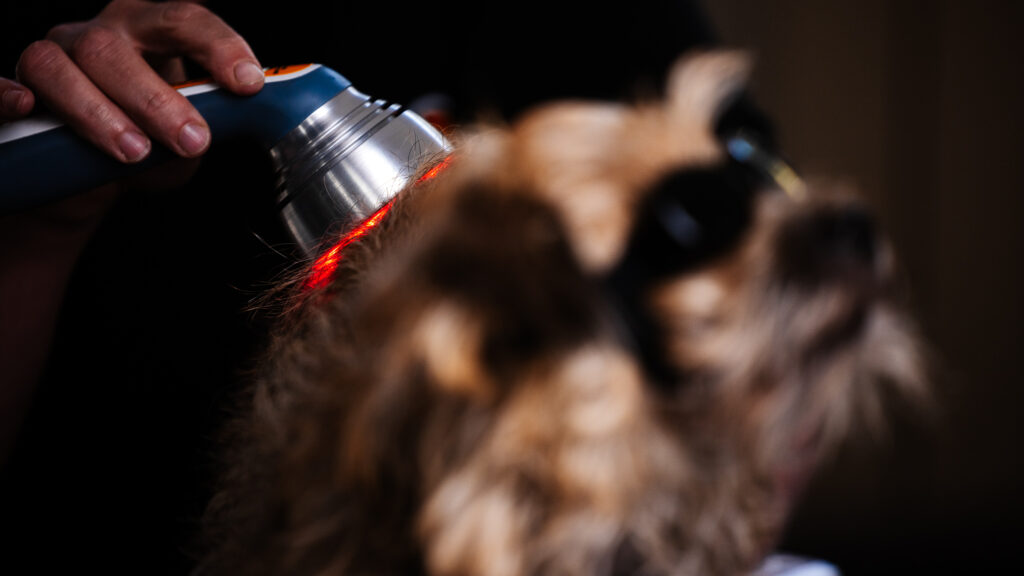
Laser therapy, specifically Low Level Laser Therapy (LLLT) uses light energy to stimulate healing at a cellular level. Unlike surgical lasers that cut or cauterise, therapeutic lasers use low energy to influence biological processes in the body.
In simple terms, this treatment helps cells work more efficiently. It can increase energy production in cells, support circulation, reduce inflammation and even encourage new tissue to grow.
How Does It Help?
Laser therapy can support healing in several ways:
- Pain relief: By reducing inflammation and stimulating endorphin release
- Tissue repair: Encouraging collagen production and cell regeneration
- Reduced swelling: Through improved lymphatic drainage
- Nerve and muscle support: Enhancing blood flow and reducing tension
It’s commonly used to treat:
- Joint pain and arthritis
- Muscle strains and tendon injuries
- Post-surgical recovery
- Wounds, skin lesions and hot spots
- Chronic conditions like otitis or lick granulomas
Laser therapy can also be used on acupuncture points as a needle-free alternative.
Getting the Dose Right: Why Technique Matters
Just like medication, laser therapy must be dosed correctly. The effectiveness depends on several factors:
- Wavelength: Determines how deeply the laser can penetrate. Some reach just below the skin, while others go deeper into muscle or joint tissue.
- Tissue type: Skin colour, coat density, and hydration all affect how light is absorbed.
- Contact and pressure: Placing the device directly against the skin — and applying slight pressure – helps more energy reach the target tissue.
- Time and power: Using low power for longer periods is often more effective for healing, while higher power over shorter periods may help with pain relief.
For healing tissues, the general principle is: slow and steady wins the race. Too much energy too quickly can have the opposite effect, causing discomfort or interfering with natural processes.
Different Techniques, Different Outcomes
There are two main ways to apply therapeutic laser:
- Scanning technique: The laser is moved over a broader area slowly. Best for supporting healing and reducing inflammation.
- Point-to-point technique: The laser targets a specific site with higher intensity. Often used for short-term pain relief or tight, localised issues.
Each approach has its place depending on the condition, the goal, and the individual dog’s response.
When Not to Use Laser Therapy
While laser therapy is safe when used correctly, there are a few important precautions:
- Avoid using it over tumours or areas with suspected cancer
- Do not apply over open growth plates in puppies
- Not suitable over recent steroid injection sites or areas of active bleeding
- Caution is needed near nerves, pacemakers or the carotid sinus
At the Renew Centre, we always assess suitability before beginning treatment and adjust protocols to match each dog’s health status, age and therapeutic needs.
Final Thoughts: Light That Heals
Laser therapy offers a gentle but powerful way to support healing, improve comfort and speed up recovery. When applied with skill and care, it can enhance quality of life for dogs managing chronic pain, recovering from injury or simply needing a little extra support in their rehabilitation journey.
If your dog is currently on a rehab plan or struggling with pain, our team can help assess whether laser therapy is right for them.
Because every dog deserves the chance to move, heal and live with comfort
